BEHIND THE BUILD: TORO CONSTRUCTION

Luis Vasquez
When Chicago selected Bally’s to build its world-class casino and hotel, the vision extended far beyond entertainment. The project set out to reflect the city itself—its people, its neighborhoods, and its commitment to inclusive economic growth. To bring that vision to life, Bally’s selected the Chicago Community Builders Collective (CCBC), an eight-firm joint venture built on collaboration, equity, and community representation.
As one of the largest construction joint ventures in Chicago’s history, CCBC was built with a majority of minority- and women-owned partner firms. That intentional structure creates real opportunity—opening doors for diverse small businesses to participate in a mega project, scale their operations, and build lasting talent pipelines.
The “Behind the Build” series highlights the individuals and companies that are helping to make the Bally’s Chicago Casino project a beacon of inclusion and partnership, like Toro Construction.
Toro Construction’s story is rooted in entrepreneurship, construction, ambition, and a commitment to creating opportunities for others. Founded in 2005 as a husband-and-wife venture, Toro Construction has grown from its carpentry roots into a minority-owned general contractor and major self-performing contractor in the Chicago market. The firm provides general contracting and self-perform capabilities across multiple trades and has delivered nearly $500 million in contracts.
The Bally’s Chicago Casino project is the largest subcontract Toro has ever delivered. President Luis Vasquez says the project is also helping grow Toro’s workforce, mentor emerging firms, and demonstrate what minority-owned contractors can achieve on a project of this scale. In this Behind the Build, Vasquez talks about Toro’s role on the project, how his carpentry background shaped his leadership, and what it takes to build at this scale.
What’s Toro Construction’s scope of work on the Bally’s Chicago Casino project?
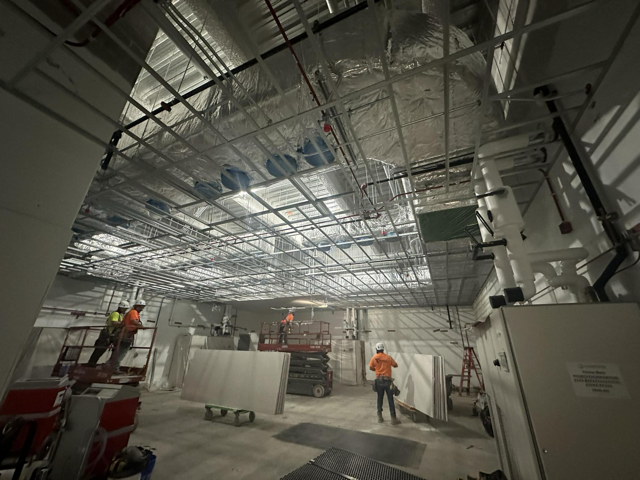
Toro Construction is leading work in the back-of-house and parking areas. Our scope includes general trades such as framing, drywall, taping, and carpentry. It takes a high level of planning, coordination, and discipline to deliver it well.
What adjustments have you had to make to fulfill that scope?
This project required us to operate at a different scale than a typical commercial job. We expanded field operations, added shifts, grew our carpentry workforce, strengthened our project management and compliance teams, and built detailed production plans to coordinate with many other trades.
On a project like this, success does not come from adding more people alone. It comes from organization, communication, and disciplined execution.
How has this project advanced your business?
We have successfully delivered projects in the $18 million range before, but this contract is nearly double that size. That makes it a major milestone for our company and an important step forward in our growth.
Have you been able to create opportunities for other firms through this work?
Yes. That has been one of the most meaningful parts of the project. We brought in second-tier contractors and suppliers, and we have been intentional about mentoring smaller firms and creating opportunities for them to work at this scale.
Two Women-owned Business Enterprise (WBE) firms we partnered with are New Era and RT Materials. New Era supported taping work, and RT Materials supplied materials. This is the largest project award in RT Materials’ history, and we are proud to be part of that growth.
How has the Bally’s Chicago Casino project contributed to Toro’s success?
It has helped us grow in several ways. We have expanded our workforce, strengthened our systems, invested in more field leadership, and demonstrated our ability to successfully perform work at this scale.
Just as important, this success is not only about Toro. It is also about the workers, suppliers, and partner firms growing alongside us.
What’s it like working with the CCBC team?
Working with CCBC has been a very positive experience. They have created an environment where minority contractors are expected to perform at a high level while also receiving the support needed to succeed on a project of this scale. Their team understands the complexity of the work and has been responsive, collaborative, and invested in helping everyone succeed.
How do you approach hiring for a project like this? What does that process look like?
Workforce development is a big part of who we are. We work with partners such as CCBC, HIRE360, unions, and workforce organizations to recruit candidates from the community and help them enter the trades.
Through partnerships tied to Illinois Works and the Illinois Housing Development Authority, we have been able to support students entering the carpenters’ union and gaining real jobsite experience. For us, this work is not just about meeting requirements. It is about helping people build long-term careers.
What does it take to bring on and support workers who are newer to the trades?
A lot of it comes down to mentorship. We believe experienced journeymen have a responsibility to teach the next generation.
At Toro, we sponsor apprentices into the union, support them in the field, and help create pathways not only in hands-on construction work but also in project management, estimating, safety, and office operations. We want people to see that construction can open many different career paths.
You mentioned being a carpenter at heart. How did that path lead you to becoming a business owner?
I have always been ambitious, and I’ve always liked numbers. I reached a point in my career where I felt I had gone as far as I could working for others, and I wanted to build something of my own.
My background in carpentry gave me a strong understanding of the work, the costs, and what it takes to lead a team in the field. Over time, that foundation helped me build a company that could grow while staying grounded in the work itself.
What do you want people to know about what it takes to build a large-scale project like this?
When people drive by this building years from now, they will see a major landmark. What they may not see are the early mornings, the long shifts, the weekends, and the sacrifices made by the people who built it.
Construction is not only about concrete and steel. It is about families, livelihoods, and futures. Every paycheck supports a household. Every apprenticeship creates a path forward. It’s important to recognize the people whose work often goes unseen, even as the buildings they create become part of the city’s skyline.