

Building a Culture That Protects Every Worker
On the Bally’s Chicago Casino project, safety is a shared responsibility across teams, trades, and leadership. From early planning to daily coordination, everyone has a role to play in ensuring every worker goes home safely at the end of the day.
During Construction Safety Week, held May 4-8, we asked safety coordinators for the Chicago Community Builders Collective (CCBC) and our trade partners to share what it takes to build and maintain a strong safety culture. Annual, industry-wide recognition reinforces awareness of safety practices, emphasizing that every worker has the right to a safe job site and the responsibility to work safely.
Taylor Goyke, Safety Director, and Sheryl Butler, Project Safety Director, with CCBC JV partner Gilbane Building; Frank Streg, Safety Manager, McHugh Concrete; and Chad Turra, Safety Manager, Danny’s Construction, all agree that communication, engagement and a shared commitment to do their part to maintain a safe environment is what keeps a project like this moving forward safely.
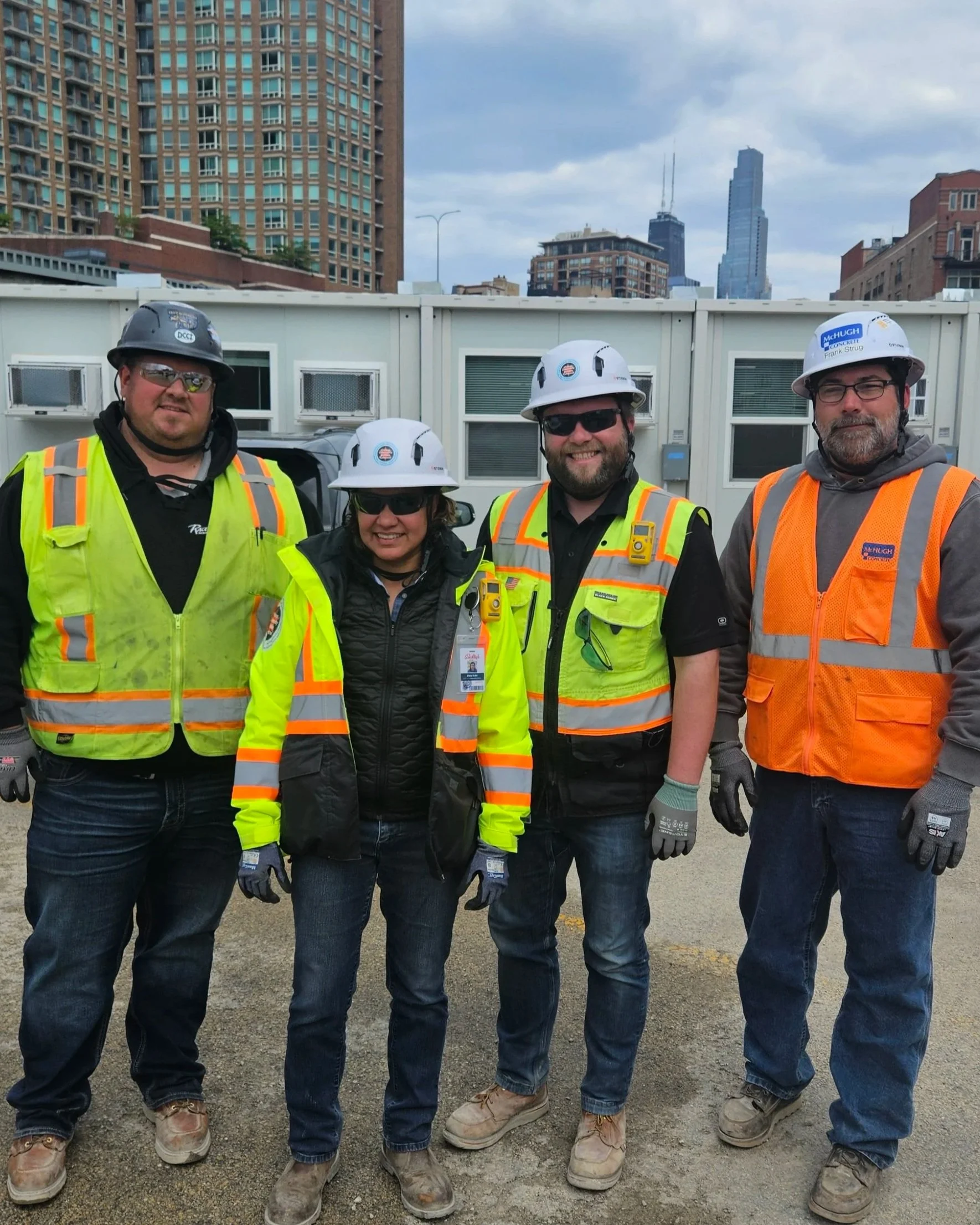
Members of the safety team on the Bally’s Casino Chicago project: (From left) Chad Turra, Sheryl Butler, Taylor Goyke and Frank Streg.
Q: What is a typical day for you?
Taylor: I oversee safety across the entire site. I’m out here a few days a week making sure high-risk activities are planned, coordinating with trade partners, reviewing phasing and startup plans, and ensuring compliance.
Sheryl: We start every day with stretch and flex and pre-task planning. The site is divided into different zones, and each group reviews their plan for the day so everyone knows what they’re doing and what risks they may face.
Frank: I am primarily focused on the construction of the hotel, which has cast-in-place concrete. So, I'm looking out for our team's fall protection and their PPE for pouring concrete. We've got a lot of moving pieces, so my head is on a swivel.
Chad: When I arrive onsite, I get things prepared for the team. We do stretch and flex and then make announcements and share any hazards from the previous day that we have noticed or encountered. We break into our pre-task plan groups and talk about hazards, how to mitigate them, and what they're doing for the day. Then, they go to work.
Q: What does a career path into construction safety look like?
Taylor: I studied occupational health and safety at Illinois State University, but there are a lot of paths.
Frank: I came from the trades as a carpenter. My safety director saw something in me and gave me an opportunity to come to the safety department, and here I am 20 years later.
Sheryl: I started out in the Air Force and was able to transition into construction.
Q: How do you ensure everyone on site is aligned with safety standards from Day One?
Taylor: It starts with pre-planning. For high-risk work, we’re typically planning at least 60 days out. But for a project like this, some of that planning started years earlier—from how the building is designed to the safety systems that are built into it. Before anyone comes on site, they go through a prequalification process to make sure their company aligns with our standards. Then we hold detailed planning meetings around their scope of work—how they’ll do it, what risks exist, and how to mitigate them. We try to identify hazards as soon as possible. Once they mobilize, we walk through everything again to make sure they have the right plan and equipment in place.
Sheryl: We also run orientations for new workers, conduct site walks and audits, review job hazard analyses, and meet with trade partners to stay aligned.
Q: What does a strong safety culture look like on a project of this scale?
Taylor: It’s when everyone is looking out for each other across trades. When you see a pipefitter and a mason having a conversation about safety, that’s when you know the culture is there. People are engaged. Maintaining that comes down to relationships and making sure people know you’re a resource.
Sheryl: Safety is an attitude. If you don't want to follow the rules, this is not the right place for you. We want people that want to come to work, who are willing to come out here and have the mindset of ‘I want to make sure that I do this right.’
Frank: You have to want to do it and care enough for the people that are working around you to be able to keep them safe and to help them understand what they need to do to take that initiative. You’ve got to get on a level with them, and you’ve got to want to take care of them—and we do.
Chad: Communication. It’s making sure information flows between teams and that everyone understands the plan for the day. When people are working together and looking out for each other, that’s when you see a project run safely.
Q: How do you approach accountability when something goes wrong?
Sheryl: It’s about understanding, not blaming. Most issues trace back to planning—whether something wasn’t anticipated or resources weren’t in place. We focus on having honest conversations to figure out what happened and how to improve.
Taylor: It starts with respect. This is a highly trained workforce. People know what’s expected. It’s about communication, reminders, and also recognizing when people are doing things right. That positive reinforcement goes a long way.
Q: What’s a safety mindset you try to reinforce?
Sheryl: Think before you do. Safety is an attitude. You have to want to do it right. We want people to run through that mental checklist—not just their equipment, but whether they’re prepared for the task ahead. The culture has evolved in a positive way. People are more engaged, more willing to speak up, and more committed to looking out for each other.
Frank: You have to care. It’s about building relationships and making sure people know you’re there for them.